


Table Of Content
Key Takeaways:
- Open Standard has unveiled Open USD (OUSD), a dollar-backed stablecoin supported by more than 140 companies, including Visa, Mastercard, Coinbase, Stripe, Google, and BNY Mellon.
- Unlike traditional stablecoins controlled by a single issuer, Open USD will operate under a consortium model where partners share governance and reserve income.
- The announcement reflects the growing shift from stablecoins as crypto trading tools to core financial infrastructure for payments and settlement.
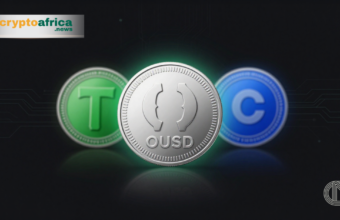
Open Standard, a consortium of over 140 companies including Visa, MasterCard, Stripe, and Coinbase, has announced a new dollar-pegged stablecoin called Open USD.
The roster features traditional financial giants like BNY Mellon, BlackRock, and Standard Chartered, as well as major technology and crypto platforms, including Google and Ripple.
Open USD is scheduled to go live later this year across multiple blockchain networks like Solana, Base, Stellar, and Polygon.
Open USD Launches With Unprecedented Institutional Backing
Open USD introduces a significant departure from the established industry model. The network offers zero-fee minting and redemption without artificial volume caps—a model designed specifically to remove the cost barriers that corporate enterprises face when moving capital at scale.
In the words of Zach Abrams, founding CEO of Open Standard and CEO of Bridge;
Existing stablecoins have great strengths, but to use them at scale, businesses need something that’s open, low-cost, high-throughput, broadly accessible, and aligned to their interests.
Open Standard is governed by an independent board composed of its participating partners. This collaborative governance model ensures that no single entity controls the development roadmap.
This transforms the digital asset from a proprietary product into a neutral utility for global money movement.
Carolyn Weinberg of BNY believes that a “stablecoin with neutral governance and shared economics is a unique combination that has potential to unlock the next phase of digital assets growth.”
Turning Competitors Into Ecosystem Partners
To understand the significance of this launch, it helps to look at how traditional stablecoins operate.
The stablecoin market is worth an estimated $300 billion. 80% of that market is controlled by established market leaders Tether (USDT) and Circle (USDC). These stablecoins function under an issuer-controlled model.
In that setup, a single company manages the reserves, dictates the network rules, and keeps the massive interest income generated by the cash and treasury bills backing the tokens.
The businesses and fintech platforms that integrate these legacy stablecoins serve as distribution channels. They bring utility and users to the token while receiving none of the underlying reserve profits.
What Makes Open USD Different
Open USD will instead operate through a shared economic structure.
DoorDash co-founder Andy Fang said, “What sets Open USD apart is that it’s genuinely open: no single company controls it, and the partners building on it have a seat at the table. That’s the right foundation for moving money for everyone.”
After deducting a small fee to cover operational costs, Open Standard distributes the interest earnings generated by the reserves directly back to its ecosystem partners.
This change turns former infrastructure competitors into commercial allies. Participating institutions gain a direct financial upside as the network grows. Global card networks, payment processors, and marketplace platforms now have a powerful incentive to make Open USD their primary settlement asset.
This is echoed in the statement from Will Graybrick, Stripe’s President of Technology and Business.
Businesses need a stablecoin designed to work at a global, industrial scale. That’s why Open USD will be the default stablecoin for businesses running on Stripe; they are the ones shaping the next 15 years of economic growth.
The Stablecoin War Is About Economics
Could the next crypto battle for dominance be about economics and not technology?
For years, competing blockchain networks and token issuers focused heavily on transaction speeds, network fees, and smart contract capabilities.
However, basic technology has largely become a commoditized resource. Multi-billion-dollar enterprises have been held back because participation meant creating massive financial value for stablecoin issuers without capturing any of the returns.
Stripe, a member of the consortium, has now announced OpenUSD as its default stablecoin. Stripe powers over 5 million businesses. In 2025, it generated $1.9 trillion in total payments volume, equivalent to roughly 1.6% of global GDP.
Payment leaders are no longer content to simply pass along someone else’s token. They want to own a piece of the financial rails.
Global Settlement Rails and the Impact on African Fintech
Financial heavyweights now realize that digital dollars are the fast lane for future settlement services.
Recent infrastructure moves by companies like PayPal, Ripple, and JPMorgan show that stablecoins are transitioning into a universal settlement layer for mainstream financial operations.
African financial ecosystems have already seen a wave of institutional integration. Flutterwave has partnered with Ripple, one of the consortium’s participants, as well as Tempo. Paga partnered with SUI in May and Crossmint in June.
Yellow Card also partnered with Mastercard, another participant in the consortium, in June and recently secured Swiss regulatory approval.
Historically, these local companies had to adapt to the rules and fee structures of dominant, single-issuer tokens. If Open USD achieves broad global adoption, it will provide African fintech applications with an alternative settlement option designed specifically for high-volume enterprise use.
Increased infrastructure competition naturally translates to lower operational costs and better margins for local companies handling remittances and business payments.
More importantly, because Open USD is backed by the absolute largest names in global banking and card processing, its adoption could dramatically increase international confidence in blockchain-based payments originating from the continent.
Digital Dollars as Public Infrastructure
Ultimately, the emergence of Open USD demonstrates that stablecoins are evolving into public infrastructure.
Years ago, market participants chose among cryptocurrencies based on speculation and personal brand affinity. Today, large enterprises are choosing payment rails based on efficiency, regulatory compliance, and economic alignment.
Digital dollars are becoming deeply embedded in finance. Their speed and efficiency have led to widespread adoption across infrastructure, so much so that the end user may never even know which specific stablecoin powers their transactions.
The launch of Open USD does not mean existing giants like USDT or USDC will disappear overnight. However, the announcement did lead Circle shares to drop briefly by 13%.
However, it proves that the stablecoin market has entered a mature, infrastructure-driven phase.