


Kenyan Fintech Yiksi Secures South African Crypto Authorisation for Stablecoin Payments
The FSCA licensed the entity as a Category I Financial Services Provider under registration number 55213.


Table Of Content
What to Know
- Kenyan fintech Yiksi secured South African regulatory authorisation through its local entity, Yiksi Fintech (Pty) Ltd.
- The FSCA licensed the entity as a Category I Financial Services Provider under registration number 55213.
- Authorisation provides a legal foundation to seek local banking, liquidity, and payment partnerships.
- The approval does not mean Yiksi’s products are live or that partnerships are finalized in South Africa.
- Licensing covers financial advisory and intermediary services, not blanket operational or custody clearance.
Kenyan-based fintech Yiksi has achieved a significant regulatory milestone in its pan-African expansion strategy. The company has secured official authorisation from South Africa’s financial watchdog, the FSCA
Yiksi Obtains South African Crypto Authorisation
Through its local operating entity, Yiksi Fintech (Pty) Ltd, the company has obtained authorisation by the Financial Sector Conduct Authority (FSCA) as a Category I Financial Services Provider (FSP) for crypto assets, under registration number 55213.
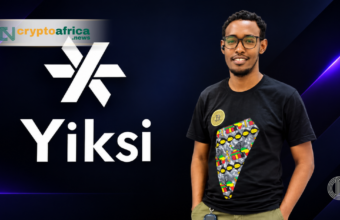
Yiksi Founder and Chief Executive Officer Bile Ahmed Kabah noted that the regulatory approval marks a pivotal step for the Nairobi-founded firm.
By embedding its subsidiary within South Africa’s regulatory perimeter, Yiksi can now engage formally with established financial institutions, liquidity providers, and regional payment networks.
What the Authorisation Allows
Within South Africa’s evolving regulatory framework, crypto assets are formally classified as financial products under the Financial Advisory and Intermediary Services (FAIS) Act.
The FSCA’s licensing powers cover crypto asset service providers only insofar as they render financial services related to crypto assets as defined under the FAIS Act.
An FSCA Category I FSP authorisation is not a blanket licence covering every possible digital asset service, such as proprietary exchange custody or unvouched cross-border remittance clearing.
Authorised entities remain subject to rigorous oversight, including ongoing compliance mandates under South Africa’s Financial Intelligence Centre (FIC) framework regarding anti-money laundering (AML) and counter-terrorist financing (CTF).
The announcement and the licence do not mean Yiksi products are now available in the region.
Yiksi’s Stablecoin and Payments Strategy
Yiksi’s broader commercial roadmap centres on bridging traditional currency systems with blockchain-based rails through stablecoin technology. The company describes its business as “transforming finance in the Horn of Africa by enabling seamless conversion from local currencies to globally accepted digital assets.” The company’s product ecosystem includes:
- Taran App: A consumer-facing application designed to streamline digital asset interaction.
- Yiksi Wallet: A multi-functional digital wallet facilitating secure storage and local-currency-to-stablecoin conversions.
- Yiksi Pay for Merchants: A business payment solution aimed at enabling merchants to accept digital value transfers efficiently.
In May, Yiksi Limited signed exclusive MOUs with Cantor8 to bring M-PESA and EvC Plus On-Chain.
Why South Africa Matters to a Kenyan Fintech
Expanding into South Africa offers African fintechs access to one of the continent’s most advanced banking sectors and deep capital markets. The region is arguably the most regulatory-mature region for virtual asset providers.
South Africa also has the second-largest market on the continent. The South Africa crypto market grew 52% to $39.3 billion, driven by cross-border flows.
Kenya’s capital requirements are also pushing crypto startups toward South Africa’s larger, more regulated market. Building a viable stablecoin and cross-border payments business requires robust banking relationships and dependable liquidity corridors.
By securing regulatory standing, Yiksi addresses the primary hurdle faced by digital asset startups: building institutional trust with traditional financial gatekeepers.
What to Watch
South Africa’s proactive stance on crypto regulation has positioned the country as a leader in regulatory clarity in Africa. This regulatory certainty attracts ambitious fintechs from across the continent, transforming South Africa into a testing ground for regulated Web3 innovation.
- Product Rollouts: Confirmation of when specific applications, such as the Taran App and Yiksi Pay, officially go live for South African users.
- Partnership Announcements: Formal disclosures regarding banking alliances, local liquidity providers, and payment infrastructure integrations.
- Regulatory Evolution: Ongoing compliance audits and potential updates to cross-border reporting rules overseen by South African regulators.