



Kenya Becomes Africa’s Third-Largest Crypto Market With $5.7B
The growth pushed Kenya ahead of Ethiopia, which recorded approximately $3.7 billion, staying behind South Africa and Nigeria.

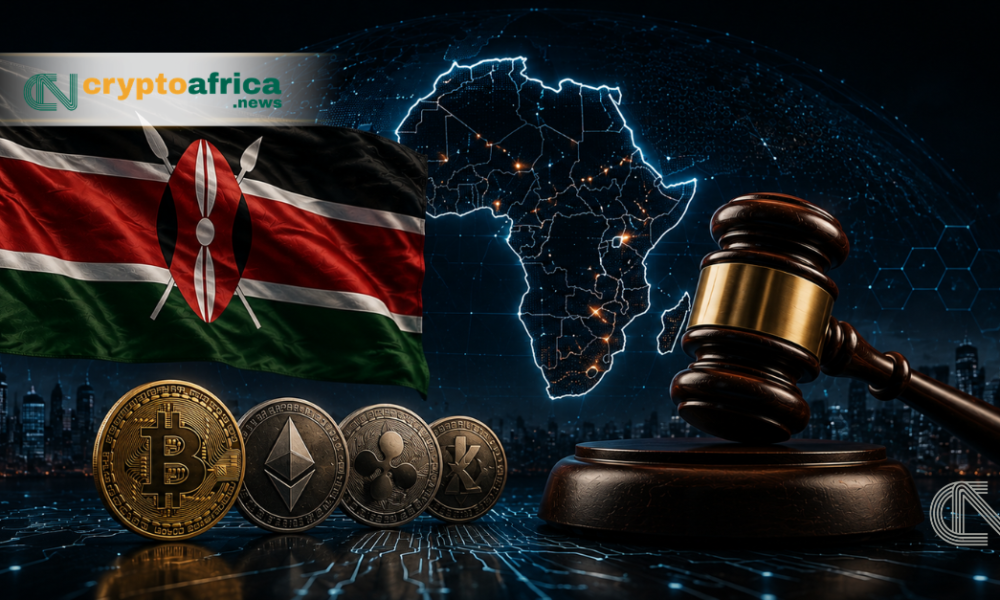
Table Of Content
- TL;DR
- Kenya Overtakes Ethiopia as Africa’s Third-Largest Crypto Economy
- Stablecoins Drive Kenya’s Growing Cryptocurrency Activity
- Africa’s Stablecoin and Crypto Economy Continues to Expand
- Kenya’s Crypto Growth Coincides With New Regulatory Framework
- What Kenya’s Growing Crypto Market Means for Africa
TL;DR
- Kenya recorded about $5.7 billion (KSh740 billion) in cryptocurrency transaction volume in the year ending June 2026, up 38% from $3.89 billion the previous year.
- The growth pushed Kenya ahead of Ethiopia, which recorded approximately $3.7 billion, making Kenya Africa’s third-largest cryptocurrency economy behind South Africa ($39.3 billion) and Nigeria ($38.1 billion).
- Stablecoins account for a significant share of Kenya’s crypto activity, with individuals and businesses increasingly using them for cross-border payments, supplier settlements, remittances, and access to dollar-denominated value.
- Kenya’s increased crypto activity coincides with the implementation of its regulatory framework following the enactment of the Virtual Asset Service Providers (VASP) Act, 2025.
Kenya Overtakes Ethiopia as Africa’s Third-Largest Crypto Economy
Kenya recorded $5.7 billion (KSh740 billion) in cryptocurrency transaction value between July 2025 and June 2026. This represents a 38% year-on-year surge from the $3.89 billion recorded in the previous year.
The surge moved Kenya past Ethiopia, which recorded approximately $3.7 billion over the same period, positioning Kenya as the third-largest cryptocurrency economy in Sub-Saharan Africa. South Africa and Nigeria retained the top two positions across the continent, together generating more than three-quarters of regional transaction volume.
| Country | Crypto Transaction Value |
| South Africa | $39.3 billion |
| Nigeria | $38.1 billion |
| Kenya | $5.7 billion |
| Ghana | $5.1 billion |
| Ethiopia | $3.7 billion |
Stablecoins Drive Kenya’s Growing Cryptocurrency Activity
Dollar-pegged stablecoins have emerged as key financial tools for Kenyan businesses and individuals navigating currency volatility and foreign exchange liquidity constraints.
Local entrepreneurs and import-export enterprises rely on stablecoins for international supplier payments and cross-border trade, bypassing traditional banking friction and delays. At the same time, diaspora remittances use digital dollars for faster, low-cost transfers directly into digital wallets.
The distinction between Kenya’s real-economy adoption model and that of other regional leaders is highlighted by peer-to-peer (P2P) transfer compositions. Bitcoin accounted for only 2% of Kenya’s reported P2P transactions below $10,000 USD. By contrast, small-scale P2P transfers in Nigeria remained heavily Bitcoin-driven at 92%, while Ghana stood at 59% and South Africa at 22%.
A separate survey also points to consumer appetite for stablecoin payments. Research discussed on CNBC Africa found that 84% of Kenyan respondents would be more likely to choose a retailer that accepts stablecoins.
Africa’s Stablecoin and Crypto Economy Continues to Expand
Kenya’s growth is part of a broader expansion of digital asset rails across Sub-Saharan Africa. The regional cryptocurrency economy expanded 13.4% year over year to reach $101 billion in transaction volume.
A central driver across the region is the surge in stablecoin adoption. Stablecoin activity across Sub-Saharan Africa grew sixfold from $2.3 billion in 2022 to $14.6 billion in 2026, with over one-third of total regional volume flowing into personal wallets and peer-to-peer payment channels.
As commercial corridors expand, Kenya has cemented its position as the premier financial hub for cryptocurrency integration across East Africa.
Kenya’s Crypto Growth Coincides With New Regulatory Framework
The surge in transaction volume coincides with legal clarity establishing regulatory oversight for digital asset service providers in Kenya.
After the gazetting of the Virtual Asset Service Providers (VASP) Act, 2025, the framework officially took effect on November 4, 2025. Under the Act, regulatory and supervisory duties are divided between the Central Bank of Kenya (CBK) and the Capital Markets Authority (CMA).
The VASP Act introduces formal licensing requirements, Anti-Money Laundering (AML) standards aligned with international Financial Action Task Force (FATF) guidelines, customer due diligence, and strict asset segregation rules for exchanges, wallet providers, and payment processors.
Clear regulatory parameters are expected to lower compliance risks for institutional participation and facilitate safer integration with existing banking infrastructure. However, a recent increase in capital requirements could affect crypto startup participation in the market.
What Kenya’s Growing Crypto Market Means for Africa
Kenya’s movement into third place highlights how functional payment applications, rather than pure trading speculation, are shaping cryptocurrency adoption across Africa.
The stark contrast between Nigeria’s Bitcoin-heavy transaction volume and Kenya’s stablecoin-dominant model demonstrates two distinct tracks within African Web3 ecosystems. While Nigeria acts as a high-volume trading and exchange market, Kenya is positioning itself as an operational testbed for digital dollar settlements and commercial payments.
As regional competition intensifies among South Africa, Nigeria, and Kenya, long-term ecosystem sustainability will depend on balancing financial innovation with robust cybersecurity, consumer protection, and supervisory oversight.