


Nigeria SEC Assures Crypto and FinTech Firms of Clear Regulations Amid ₦2B Rules
Nigeria's SEC assures fintech and crypto firms of clear regulatory pathways despite concerns over the ARIP sandbox and proposed ₦2B capital requirements.

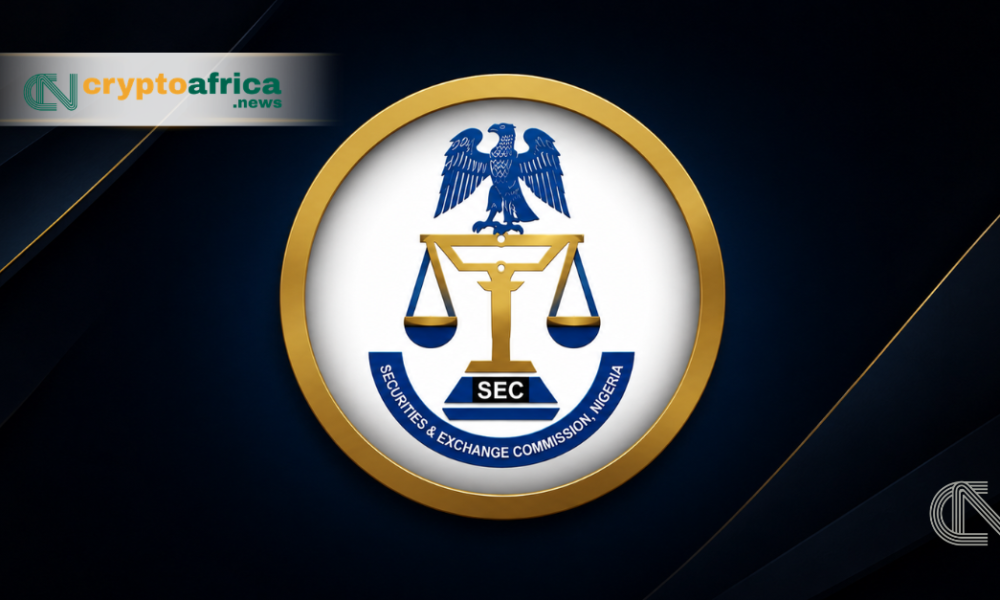
Table Of Content
What To Know:
- The SEC reassured digital asset operators that its sweeping regulatory frameworks are meant to create structural pathways, not stifle innovation.
- The SEC emphasized that the Accelerated Regulatory Incubation Programme (ARIP) provides an Approval-in-Principle, which is a supervisory step, not a full license.
- Strict ₦2 billion minimum capital requirements are being defended as necessary buffers against market volatility and customer losses.
Nigeria’s Securities and Exchange Commission (SEC) has sent a message to crypto and fintech operators in Nigeria. The SEC has made it clear it wants them inside the regulated market, but getting in and staying in will take real capital, governance and compliance work.
The message came at the commission’s second Bi-Annual Regulator/FinTech Clinic on Wednesday, 7 October, reported from Abuja. The SEC’s theme for the event was “From Regulatory Entry to Sustainable Scale.”
The agenda covered classifying virtual asset service providers (VASPs), advancing from incubation to full registration, and discussing capital requirements and ongoing compliance. Speakers came from the SEC, the Nigerian Financial Intelligence Unit (NFIU) and the FinTech Association of Nigeria.
“We do not want to gag anyone”: the DG’s message
SEC Director-General Dr Emomotimi Agama emphasised that recent regulatory frameworks are designed to ensure market stability, not stifle innovation.
“We want the digital platforms to enter the market through clear pathways. We do not want to gag anyone, but we are open to listening to every complaint,” Agama stated, noting that the time has come to build a structurally sound ecosystem for Nigeria.
He urged operators to comply with the Investments and Securities Act (ISA) 2025 and related rules, and said the SEC would work with firms on market safety and stability.
The reassurances come at a critical time for the local digital asset industry, which is currently navigating a wave of sweeping regulatory updates, including mandatory incubation programs and heavily increased capital requirements.
Contextualising a $96 Billion Market
The SEC’s careful approach is largely dictated by the sheer scale of the market it is attempting to regulate. Chainalysis’ 2026 Global Crypto Adoption Index, covering July 2025 to June 2026, ranks Nigeria third for grassroots adoption, behind Brazil and the United States. Nigeria also ranks first globally for its peer-to-peer economy and cross-border flows.
In the previous edition, Chainalysis counted $92.1 billion in on-chain value received in Nigeria between July 2024 and June 2025, nearly three times that of South Africa. Earlier in March 2026, the SEC reported that Nigeria’s digital finance ecosystem had previously recorded a staggering $96 billion in cryptocurrency and virtual asset transactions.
The SEC needs to regulate Africa’s largest crypto market, driven by not just its young population but real-life problems like cross-border payments and remittances, without crippling it.
The regulator is requiring operators to implement adequate risk governance, robust compliance plans, and clear anti-money laundering (AML) protocols through the Nigerian Financial Intelligence Unit (NFIU).
ARIP is a pathway, not a licence
For many crypto startups, the Accelerated Regulatory Incubation Programme (ARIP) is the gateway into Nigeria’s formalised market. While the SEC has granted Approval-in-Principle (AIP) to several crypto firms under this programme, critics have noted the friction of operating within a sandbox environment for extended periods without receiving a full operational licence.
Janet Joseph, the SEC’s Divisional Head of Virtual Assets and FinTech Supervision, said AIP is a controlled supervisory route and not a final licence.
It lets the commission examine a firm’s governance, capital readiness, technology controls and investor protection safeguards before deciding on formal registration. She urged firms to see it as a responsible route to registration rather than a supervisory grip.
The sandbox is not easy to get into. FinTech Association president Stanley Jacob asked the SEC to bring more firms into its incubation programme to share knowledge. Bola Ajomale, the SEC’s Executive Commissioner for Operations, said registration delays often come from unclear proposals, weak risk governance, insufficient capital and weak compliance plans.
Tope Onwionoko, Head of Enforcement, said some fintech firms drift from their approved activities into unapproved services and should stay within the scope of their registration.
The ₦2 Billion Capital Hurdle
Perhaps the most debated aspect of the SEC’s recent digital asset rules is the steep financial barrier to entry. In August 2026, the SEC proposed new guidelines requiring digital asset exchanges and custodians to maintain a minimum capital base of ₦2 billion, alongside a ₦30 million registration fee.
While smaller startups have voiced concerns that these figures could consolidate the market and price out local founders, the SEC maintains that the capital floor is non-negotiable for market security.
Abdulrazak Mohammed, Head of the Inspectorate Division at the SEC, defended the capital requirements during the clinic. He said the primary goal is to build operators that will survive in the market long term.
The SEC, he noted, will only consider registering operators that can prove they have real and available resources capable of withstanding losses. In his words, “Capital is the firm’s financial buffer against adversity, not clients’ assets, borrowed funds or unrealised assets.”
Why This Matters
Nigeria is transitioning its crypto market out of a legal grey zone and into primary legislation. The combination of the CBN lifting the banking freeze for licensed Virtual Asset Service Providers (VASPs) and the SEC strictly enforcing the perimeter means the rules of engagement are finally clear, even if they are expensive.
As Dr Stanley Jacob noted during the event, the industry ultimately expects effective regulatory alignment to ensure clarity. The SEC has now drawn its lines; it is up to the operators to prove they have the capital and compliance infrastructure to cross them.
The SEC is offering a clearer door and a higher threshold in the same breath. Whether “clear pathways” becomes a real route to licensing will be decided less by speeches than by who graduates from ARIP, and when.