

30 Cryptocurrency Terms Every Beginner Should Know
Learn essential cryptocurrency terms from HODL and DeFi to gas fees, staking, and rug pulls; explained in plain English.


Table Of Content
This list breaks down the most important cryptocurrency terms into four categories: the foundational concepts, the slang, the metrics and decentralised finance (DeFi), so you can find what you need and actually understand what people are talking about.
Foundational Concepts
Blockchain — A decentralised digital ledger that records transactions across many computers in a way that prevents anyone from going back and altering them. It’s the underlying technology that makes cryptocurrency possible.
Decentralisation — The principle of distributing control away from a central authority (like a bank or government) and out to a distributed network of users. It’s the philosophical core of crypto.
Smart Contracts — Self-executing code on a blockchain that automatically carries out an agreement when certain conditions are met. Think of a vending machine that releases candy when you insert coins — except for loans, insurance, digital goods, and almost anything else.
Consensus Mechanism — The process by which a blockchain network agrees on the validity of transactions. The two main types are Proof of Work (PoW), used by Bitcoin, where miners solve complex computational puzzles, and Proof of Stake (PoS), used by Ethereum, where validators lock up cryptocurrency as collateral.
Gas Fee — The transaction fee paid to network validators for processing a transaction on a blockchain. Gas fees rise and fall based on how congested the network is, which is why the same transaction can cost wildly different amounts at different times.
Wallet — A tool for storing the private keys that give you access to your cryptocurrency. Hot wallets live online and are convenient for frequent trading, while cold wallets stay offline and are far more secure for long-term storage.
Private Key — A secret string of letters and numbers that proves ownership of a blockchain address and authorises transactions. Anyone with your private key has full access to your funds, which is why protecting it is the single most important habit in crypto.
Seed Phrase — A list of 12 to 24 random words that can restore all your private keys. It acts as a master password for your entire crypto portfolio. Lose it, and you may lose everything; share it, and you’ll definitely lose everything.
Public Address — The string of characters you share with others to receive cryptocurrency. It’s similar to a bank account number, safe to give out, but uniquely tied to you.
Fork — A change to a blockchain’s protocol that creates a split. A soft fork is backward-compatible, while a hard fork creates a permanent divergence, sometimes resulting in an entirely new cryptocurrency. Bitcoin Cash, for example, was born from a hard fork of Bitcoin.
Crypto Trader Slang
HODL — Originally a typo of “hold” in a 2013 forum post, it has become a core philosophy of holding onto crypto assets for the long term despite market volatility.
FOMO — “Fear Of Missing Out,” the anxiety that drives hasty buying during a price rally. One of the most reliable ways traders lose money.
FUD — “Fear, Uncertainty & Doubt,” negative information or sentiment spread (sometimes deliberately) to manipulate prices and cause panic selling.
DYOR — “Do Your Own Research,” a cornerstone principle reminding investors to verify information and thoroughly research a project before putting money in.
WAGMI — “We’re All Gonna Make It,” an optimistic community slang expressing shared belief in eventual success.
NGMI — “Not Gonna Make It,” a harsh prediction of failure aimed at a project, decision, or trader.
REKT — Slang for “wrecked.” Used when a trader has suffered significant financial losses, usually from a bad trade or a sudden market crash.
Whale — An individual or entity holding a massive amount of cryptocurrency, large enough to significantly move the market with a single trade.
Trading & Market Metrics
Altcoin — Short for “alternative coin.” Refers to any cryptocurrency other than Bitcoin, including Ethereum, Solana, and thousands of others.
ATH / ATL — “All-Time High” and “All-Time Low,” the highest and lowest prices a cryptocurrency has ever reached. Traders watch these levels closely as psychological milestones.
Market Cap — The total value of a cryptocurrency, calculated by multiplying its current price by the number of coins in circulation. It’s a far more meaningful measure of a coin’s size than the price tag alone.
Liquidity — How easily an asset can be bought or sold without dramatically affecting its market price. High liquidity means smoother trading; low liquidity means even small orders can cause big price swings.
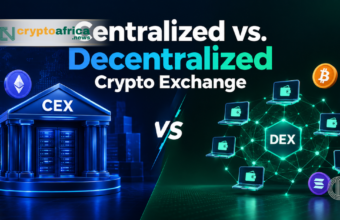
CEX / DEX — A Centralised Exchange (like Binance or Coinbase) is run by a company that holds your funds and matches orders. A Decentralised Exchange (like Uniswap) lets users trade peer-to-peer through smart contracts, with no middleman holding their money.
Staking — Locking up cryptocurrency in a Proof-of-Stake network to help validate transactions and, in return, earn rewards. It’s roughly the crypto equivalent of earning interest in a savings account.
Pump and Dump — A market manipulation scheme where a group artificially inflates the price of an asset through misleading hype, then sells off their holdings at the peak, leaving other investors with near-worthless coins.
DeFi & Investment
DeFi (Decentralised Finance) — Blockchain-based financial applications — lending, borrowing, trading, and more — that operate without traditional intermediaries like banks. It’s where some of the most innovative and risky activity in crypto happens.
Stablecoin — A cryptocurrency designed to maintain a stable value by being pegged to a reserve asset, most commonly the U.S. dollar. USDT and USDC are the biggest examples and function as the “cash” of crypto markets.
APY (Annual Percentage Yield) — The real rate of return earned on an investment over one year, including the effect of compound interest. You’ll see this advertised on DeFi staking and lending protocols, often at attention-grabbing numbers.
Airdrop — A free distribution of new tokens to wallet addresses, often used by projects to reward early adopters or generate buzz. Some airdrops have made users thousands of dollars; others are bait used in scams.
Rug Pull — A malicious occurrence in DeFi where project developers build hype to attract investors, then suddenly remove all the liquidity and disappear with the funds, leaving the token worthless. The single biggest reason DYOR matters.