



Quidax Says Nigerian Banks and Asset Managers Are Considering Stablecoin Services as Institutional Interest Grows
Despite growing interest and activity in the crypto sector, the SEC has yet to issue a full registration to a digital asset operators.


Table Of Content
TL;DR
- Quidax CEO Buchi Okoro says that Nigerian banks, asset managers, and fintechs are actively exploring stablecoin and digital asset services.
- These are plans under review, not launches, and no bank has been named as offering a product.
- Chainalysis data indicates that stablecoin activity in Sub-Saharan Africa grew to $14.6 billion between July 2025 and June 2026. The IMF estimates that Nigeria accounts for roughly 60% of Sub-Saharan Africa’s stablecoin inflows from late 2019 to early 2025.
- Despite growing interest and activity in the crypto sector, the SEC has yet to issue a full registration to a digital asset operator under its Accelerated Regulatory Incubation Programme (ARIP).
- This interest aligns with broader continental trends, as institutions like Absa Group, Stanbic Bank Ghana, and Access Bank South Africa explore crypto custody and payment partnerships.
Nigerian Financial Institutions Look Toward Stablecoin Services
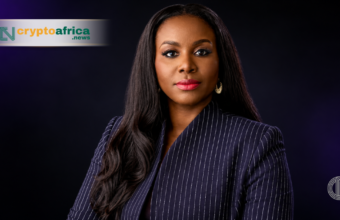
Traditional financial institutions across Nigeria are beginning to evaluate how digital assets fit into their long-term operational strategies. Buchi Okoro, Chief Executive Officer of cryptocurrency exchange Quidax, shared while speaking at an industry gathering hosted by Quidax and Tether.
“Over the next five years, our focus is on supporting the ecosystem around us. More and more institutions, banks, asset managers, fintechs and businesses across every sector are considering how to bring stablecoins and digital assets to their own customers,” he said.
This potential pivot highlights a gradual shift from retail-dominated crypto trading toward institutional-grade financial products designed for corporate and commercial applications.
Quidax is positioning itself as an infrastructure and compliance partner for these institutions, ready to provide the technical frameworks, regulatory guidance, and educational resources they would need to navigate the sector safely.
For now, though, no traditional finance institution in Nigeria has launched any product or announced that it is building one.
Why Stablecoins Are Attracting Institutional Interest
Stablecoins are digital assets pegged to underlying conventional currencies, primarily the US Dollar. They let users participate in the crypto economy with minimal exposure to the price volatility typical of unpegged cryptocurrencies, such as Bitcoin. Tether, which co-hosted The Exchange with Quidax, issues the most popular dollar-pegged stablecoin, USDT.
In Nigeria and Sub-Saharan Africa, stablecoins do more than that. While they are not without risk, they have become a way to navigate Nigeria’s economic environment.
People use them to conduct international transactions and settle with overseas suppliers in a region that suffers from cross-border banking friction and limited FX access.
They’re also used as “savings” because they are pegged to the USD, which means they maintain a relatively stable value in a region plagued by local currency fluctuations.
This level of adoption is reflected in the Numbers. Nigeria is the continent’s second-largest crypto market, and recorded $38.1 billion in on-chain activity between July 2025 and June 2026.
Stablecoin use across the continent has also surged. Chainalysis notes that between 2022 and 2026, stablecoin activity in Sub-Saharan Africa grew sixfold from $2.3 billion to $14.6 billion.
An earlier report from the International Monetary Fund (IMF) estimates that Nigeria accounted for roughly 60% of all stablecoin inflows into Sub-Saharan Africa between late 2019 and early 2025.
The Growing Opportunity for Banks and Asset Managers
If licensed institutions proceed with these initiatives, stablecoins could gradually be integrated into daily payment mechanisms, corporate remittances, institutional custody, and structured investment products.
By working with specialised infrastructure providers like Quidax, traditional financial institutions could adopt these technologies without building complex blockchain architectures from scratch.
Nigeria is not the only market where large institutions are moving. Across the continent, institutional interest in the digital asset market is growing. Absa Bank, in collaboration with Ripple, recently became the first African bank to provide digital asset custody for institutional clients. Stella Wambere Mambo, Global Markets Director at its Kenyan arm, recently discussed the transformative potential of stablecoins for cross-border settlements and the broader financial sector.
Similarly, Stanbic Bank Ghana has partnered with R&D Technologies to settle stablecoin trades between Ghanaian and Asian businesses. Access Bank South Africa has worked with Stables to explore stablecoin payments for businesses.
In an arguably bigger move, Standard Bank was the only African Bank to join a global stablecoin consortium planning to launch its own USD stablecoin by 2027. These developments indicate that major regional players are recognising the strategic importance of blockchain-based payment infrastructure.
Regulation Remains the Deciding Factor
Despite the rising enthusiasm, regulatory compliance remains the key determinant in how quickly institutional adoption can proceed. The Securities and Exchange Commission (SEC) oversees digital asset service providers across Nigeria.
Although platforms like Quidax and Busha received approval-in-principle under the SEC’s Accelerated Regulatory Incubation Programme (ARIP) in 2024, the commission emphasised during the same event that no digital asset operator has achieved final, full registration under the programme.
The SEC has previously assured crypto firms of clear regulations; large institutions may want clearer rules before deciding to participate actively in the market. While regulatory frameworks are advancing, formal institutional participation will require rigorous adherence to transaction monitoring, customer verification (KYC), custody standards, and robust investor protection measures before full-scale commercial services can be launched.
Balancing Policy Challenges and Financial Integration
The expanding role of stablecoins also presents complex policy considerations for Nigeria’s regulatory bodies. The IMF has noted concerns regarding potential digital dollarisation, risks to local monetary policy transmission, and financial integrity challenges. Addressing these issues effectively will require continuous coordination between the SEC and the Central Bank of Nigeria.
The main question is whether Nigeria can bring more stablecoin activity into supervised channels without losing the benefits users already see.