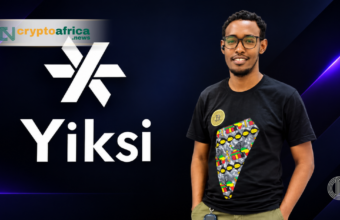



Former Yellow Card Executive Gillian Darko Now Leads Circle’s Africa Expansion
Darko brings extensive institutional experience, with past roles at J.P. Morgan, PwC, JUMO, and Yellow Card.


Table Of Content
TL;DR
- Circle has appointed former Yellow Card Group VP of Strategy Gillian Darko as Vice President and Head of Africa.
- Darko brings extensive institutional experience, with past roles at J.P. Morgan, PwC, JUMO, and Yellow Card.
- Circle has systematically built its African presence through strategic deals including partnerships with Sasai fintech and investments in Flutterwave and CrissCross.
- Regulatory frameworks in Kenya and Nigeria could shape what Circle’s Expansion looks like in these regions.
Weeks after CEO Jeremy Allaire announced a new expansion strategy targeting emerging markets, Circle has appointed Gillian Darko as Vice President, Head of Africa.
Darko joins Circle from Yellow Card, where she served as Group Vice President of Strategy. During her time at Yellow Card, the firm recorded significant commercial growth and made a strategic change to focus solely on its B2B and institutional arm.
She brings extensive experience and expertise to the role, with a background in institutional finance, advisory, and technology scaling. Her previous roles include positions at J.P. Morgan, JUMO, and PwC.
In a LinkedIn post, she writes, “For those who have followed my journey, especially through my work at Yellow Card, you’ll know: I love this ecosystem. I love stablecoins. And I am bullish about the future of digital finance on this continent. Excited about this adventure.”
Why Circle is Prioritising the African Market
Sub-Saharan Africa’s crypto market grew 13.4% to $101 billion between July 2025 and June 2026. Stablecoins were key to that growth. In the last four years, P2P stablecoin transactions grew from $2.3 billion to $14.6 billion.
This growth is driven by real-world use cases such as solving cross-border remittance problems, facilitating trade, providing access to the dollar, and protecting savings from inflation and currency devaluation.
The market, however, is largely dominated by Circle’s direct competition, Tether. A Yellowcard report published in 2025 showed that stablecoins accounted for 43% of crypto transaction volume in 2024. Of that 43%, USDT dominated transaction share at 88.5%, while Circle accounted for 9.9%.
Bvnk’s report also showed a split in USDT and USDC dominance in the continent’s two largest markets, with South Africa preferring USDC and Nigeria preferring USDT.
Circle reported 19% year-over-year growth in USDC circulation at the end of Q2 2026. It also reported a 151% surge in on-chain transaction volume to $14.8 trillion. The company plans to expand this growth in regions where stablecoin adoption is rising, driven by real-world use cases.
Circle is Expanding its African Footprint
Circle has already begun laying the groundwork in this region. In March 2026, it collaborated with Sasai fintech to expand USDC access in Africa. In July, the company invested in Flutterwave, one of the continent’s largest fintechs, with plans to integrate USDC settlement. In October, it made another investment in South African fintech CrissCross to scale stablecoin-powered rails in Africa.
These partnerships would connect USDC to existing widespread payment infrastructure across the continent, extending Circle’s reach.
Regulation Could Shape USDC’s Expansion
In Nigeria, the SEC has proposed new guidelines which include requirements for foreign stablecoin issuers.
Under the proposed rules, a foreign-issued stablecoin like USDC cannot be listed, traded, or held on regulated local platforms without explicit authorisation from the SEC. It must establish a local representative presence and provide formal evidence of regulatory authorisation from an acceptable foreign jurisdiction.
The rules also state that the formal recognition of a foreign-issued stablecoin does not automatically authorise the operation of a payment system, the acceptance of public deposits, traditional banking, foreign-exchange dealing, direct facilitation of general remittances, or stored-value services.
Issuers like USDC must operate strictly within specific areas.
Kenya’s recently gazetted framework also includes certain requirements for stablecoin issuers like Circle.
- Issuers must maintain a minimum paid-up capital of KSh 300 million (roughly $2.32 million).
- Issuers must maintain liquid capital of at least KSh 60 million or 100% of current liabilities for at least 30 consecutive days, whichever is higher.
- Stablecoins must maintain 1:1 reserve asset backing, with at least 30% of customer funds deposited into segregated trust accounts in Kenyan commercial banks.
- Issuers must obtain prior Central Bank of Kenya approval, conduct quarterly stress tests, and allow users to redeem at face value within two working days.
These regulatory shifts reflect a broader regional balance between safeguarding national monetary policy and fostering payment innovation. How Nigeria and Kenya resolve that balance could matter as much to USDC’s prospects as any partnership.
What Darko’s Appointment Signals for Circle
A stablecoin issuer needs more than a token to thrive. It needs local financial institutions, payment networks, liquidity providers, and regulatory relationships. These things are built through local leadership and trusted institutional contacts. Darko’s hire suggests Circle intends to build them deliberately.
Gillian Darko’s experience at Yellow Card helping African businesses navigate stablecoin infrastructure will be incredibly useful to a stablecoin issuer like Circle.