


Bitget Wallet Launches Stablecoin-Powered Virtual Card for Nigerians
The card works with Google Pay, and Bitget says early users can earn up to 3% cashback on all transactions, with limited slots.


Table Of Content
TL;DR
- Bitget Wallet has launched a virtual card in Nigeria that lets users spend stablecoin balances at Visa merchants worldwide.
- The card works with Google Pay, and Bitget says early users can earn up to 3% cashback on all transactions, with limited slots.
- Bitget Wallet already offers USD and EUR virtual accounts and stablecoin-to-naira bank transfers in Nigeria.
- Nigeria is Africa’s second-largest crypto economy, recording $38.1 billion between July 2025 and June 2026. The country also accounts for about 60% of stablecoin inflows into Sub-Saharan Africa since 2019.
- Bitget joins Busha and MiniPay in launching crypto-backed cards in Africa in 2026.
Bitget Wallet brings stablecoin spending to Nigeria
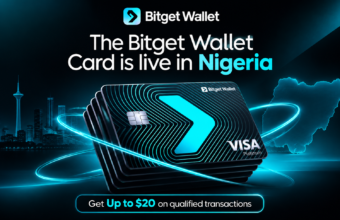
Bitget Wallet has announced the launch of a virtual card for Nigerian users. The card enables users to spend stablecoin balances at Visa merchants around the world.
Users who add the card to Google Pay can make online and contactless payments by tapping on supported POS machines.
According to Bitget, early users can tap into promotional offers, including up to 3% cashback on eligible transactions and a welcome bonus of up to $20. However, these rewards are subject to specific program terms, and slots for full cashback incentives are distributed on a limited, first-come, first-served basis.
Moving crypto beyond holding and transfers
In the early stages of crypto adoption in Sub-Saharan Africa, digital asset use was driven by speculative trading and as a hedge against inflation. Its use case eventually evolved as adoption grew, driven by cross-border transactions.
Products like the Bitget Wallet Card actively shift that narrative toward transactional utility. It also builds on what Bitget Wallet already offers in Nigeria: USD and EUR virtual accounts that convert incoming international bank transfers into stablecoins.
It also has a bank transfer feature, launched in November 2025, that converts USDT and USDC into naira for deposit into local bank accounts.
Together, these let users receive dollars, hold them as stablecoins, and spend or cash out without leaving the app.
Why Nigeria is an important market
Chainalysis puts Nigeria’s crypto economy at $38.1 billion between July 2025 and June 2026.
The report also revealed a sixfold surge in stablecoin activity in Sub-Saharan Africa from $2.3 billion in 2022 to $14.6 billion in 2026. Previous reports have estimated that Nigeria has accounted for about 60% of stablecoin inflows into Sub-Saharan Africa since 2019.
Households and small businesses drove this activity by using stablecoins for remittances, paying overseas suppliers, and hedging currency risk.
For Bitget Wallet, which says it now has over 100 million users and has issued more than 150,000 cards across 50+ markets, the Nigerian market is too big to ignore.
Competition and the changing payments landscape
Bitget is not alone. Busha launched wallet-linked cards in May that convert stablecoins at the point of sale rather than requiring a top-up. Opera’s MiniPay followed in June with a Visa stablecoin card that works across 46 countries. Bitget started its African rollout in South Africa in early April.
Even though access to traditional foreign currency through Nigerian commercial banks has stabilised somewhat compared to the severe shortages seen between 2023 and 2025, crypto providers continue pushing infrastructure integrations.
Bitget is also pushing distribution through an ambassador programme that pays 2 to 5 USDT per qualified card activation, plus 0.10% to 0.30% commission on referrals’ purchases.
By connecting self-custody wallets to everyday payment networks, Bitget is offering an alternative avenue for digital-first consumers who prefer managing funds outside legacy banking frameworks.
Regulation and consumer considerations
Nigeria’s Investments and Securities Act 2025 brought digital assets under the SEC’s purview, and the regulatory landscape continues to evolve. The commission recently proposed rules on digital asset operations, custody and markets.
For users, the practical questions are less about the technology than the terms. Conversion rates, card fees, cashback conditions and the card provider’s arrangements all affect what a purchase really costs. Convenience is not the same as cheaper, and a card that spares users a manual conversion could still carry costs that a bank card does not.
The test will be whether stablecoin cards can become a dependable option alongside conventional banking services, instead of a promotional offer that fades once the cashback ends.