


Dangote’s Refinery IPO Now on Solana Via NectarFi: How Web3 Rails Open Africa’s Largest Offering
NectarFi and GetEquity now offer Dangote Petroleum Refinery's ₦2.15T ($1.6B) IPO globally on-chain via the Solana network.

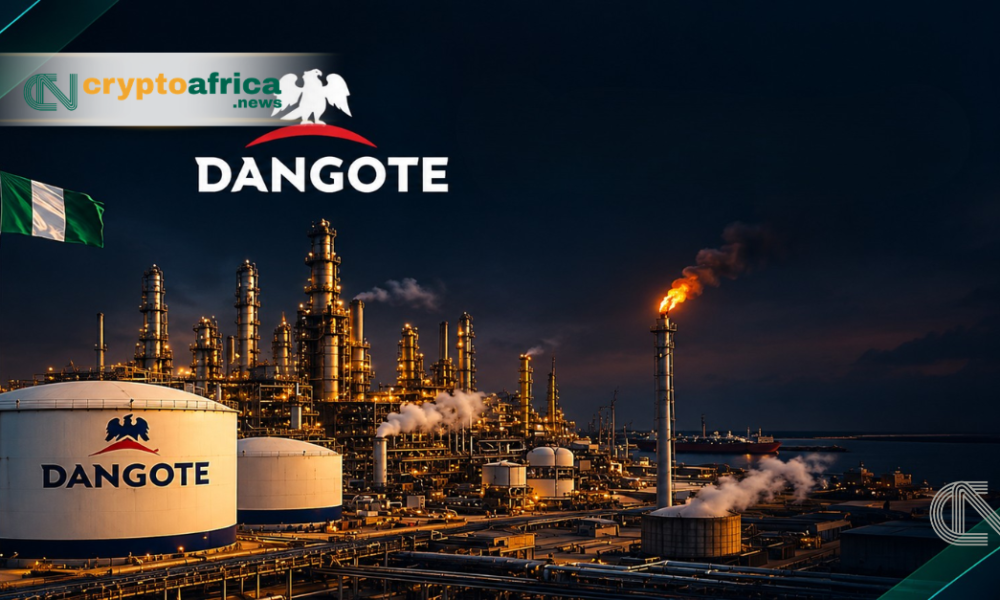
Table Of Content
Key Takeaways
- Dangote Petroleum Refinery’s ₦2.15 trillion (~$1.6 billion) IPO (4.1 billion shares at ₦525/share) opened on September 14, 2026, and NectarFi is offering subscriptions on Solana and GetEquity on Base.
- The system uses an on-chain payment wrapper ($DPRI ticket) rather than native tokenized equity, converting stablecoins (USDC/cNGN) into standard fiat subscriptions cleared via the Nigerian Exchange (NGX) and CSCS registry.
- Early snapshot data from AfriFlux reveals ₦12.86 million net-subscribed on-chain across 144 unique buyers, with NectarFi on Solana commanding 66.0% of total buys and 78.4% of net shares subscribed.
- The offering resolves key emerging-market pain points—including FX volatility, local bank account mandates, and high entry barriers—by lowering minimum subscriptions to ₦10,000 ($7.50).
- This milestone builds on SEC Nigeria’s 2026 digital asset initiatives, including the ARIP sandbox, NASD tokenized securities exchange, and ecosystem RWA deployments like Daya and Paga/tbook.
The largest share sale in Africa is now available on-chain. Dangote Petroleum Refinery’s IPO opened on Monday, September 14. Offering 4.1 billion shares, priced at ₦525 each, it is expected to raise roughly ₦2.15 trillion if fully subscribed.
Crypto-friendly users anywhere in the world can participate in the IPO using stablecoins via NectarFi, a Solana-native platform, leveraging infrastructure from GetEquity.
Normally, subscribing means going through one of NGX’s 40 approved banks, mobile operators, or fintech platforms, paying in naira. Now, anyone can participate via NectarFi using stablecoins, with a minimum subscription of ₦10,000 ($7.5).
Despite recent advancements, certain issues still plague the African stock market. Limited liquidity, worsened by high currency volatility, has made African stock offerings unattractive to foreigners.
In addition, high friction, currency conversion, and settlement bottlenecks have affected both domestic and international buyers participating in African stock offerings.
Data available via AfriFlux at the time of writing show that roughly ₦12.86 million had been net-subscribed on-chain. Buyers collectively held 24,499 shares, spread across 144 unique buyers and 197 total purchases.
Solana via NectarFi carried the larger share of activity, accounting for 66.0% of buys. The other 36.1% is on Base, which also offers settlement via the naira-backed stablecoin, cNGN. NectarFi also accounts for 78.4% of net shares subscribed, making it the single largest on-chain access point for the token so far. These are snapshot figures from an offer that remains open for weeks, not a final total.
It also furthers the case for Web3 rails such as stablecoin settlement, tokenisation, and RWAs’ availability being a path to financial inclusion, not just for investors seeking to broaden their portfolios, but also for African companies looking to raise capital.
What the IPO Is, Beyond the Crypto Angle
Dangote Petroleum Refinery operates one of the world’s largest single-train refineries. It processes 650,000 to 700,000 barrels of crude oil per day, with plans to increase that to 1.4 million barrels per day by 2029.
By early 2026, it was supplying more than 62% of Nigeria’s domestic petrol demand. The IPO itself is enormous. Private placement demand alone had already reached $2 billion before the public offer opened, with high-profile investors like Femi Otedola reportedly committing up to $100 million.
The public offer runs from 14 September to 13 October 2026, with shares scheduled to begin trading on the Nigerian Exchange in November and a secondary US listing expected in three to four years.
How NectarFi, Solana, and GetEquity Connect You to the Dangote IPO
NectarFi, a Solana-based fintech, reports processing over $7 million in transaction volume across more than 1,000 users in Africa’s largest crypto markets.
For the Dangote IPO, it plugged into infrastructure built by GetEquity, a separate Techstars-backed platform that focuses on getting Africans access to equity and private-market investments.
At the Solana Summit, GetEquity reported that it serves over 22,000 users and has processed $2 billion in transactions to date.
Neither NectarFi, GetEquity, nor Solana is offering Dangote Refinery equity as a native security token on-chain. The underlying shares are issued, registered, and held through the Nigerian Exchange’s traditional clearing system and the Central Securities Clearing System.
What NectarFi and GetEquity are providing instead is a stablecoin-powered payment ramp for users who do not have direct access to NGX or the traditional channels.
In practice: you send NectarFi stablecoins, it converts that into naira behind the scenes, and it submits a real subscription into the real NGX offer on your behalf.
What you end up with is the same thing any other subscriber gets—a claim on real Dangote shares, settled through NGX’s normal share registry—just paid for with crypto you already held, instead of a Nigerian bank transfer.
Why This Matters
The problem this actually solves is access. Typical fundraising rounds in the country face structural barriers, such as limited access to local Nigerian bank accounts and no direct route into NGX.
This, alongside limited liquidity, high currency volatility, and high access thresholds, often limits participation. This keeps out the average person without large capital, as well as global and regional investors.
Using stablecoins such as USDC allows anyone with a NectarFi wallet to participate with limited funds and without the fear of currency devaluation, regardless of where they are.
That’s a real, practical gap being closed. Essentially, NectarFi, GetEquity, and Solana are enabling significant financial inclusion and participation.
It’s also a sign of where stablecoin usage across Africa is heading: less about trading and speculation, more about being a working, everyday bridge into financial products people were otherwise locked out of.
Where This Fits
The Dangote IPO’s on-chain debut lands in the middle of a fast-moving year for tokenisation in Nigeria and across Africa. SEC Nigeria has spent 2026 building a formal regulatory framework for digital assets and Web3 in the country.
The SEC is also hosting its Tokenised Economy 2026 conference as part of a broader push that also produced Nigeria’s first regulated tokenised securities market on the NASD exchange.
NectarFi itself already had a track record here, having previously brought a tokenised SanDisk stock to African users on Solana. Daya has been building tokenised US stock access for the continent, and Paga partnered with tBook to bring tokenised real-world assets to Africa more broadly.
NectarFi and GetEquity are demonstrating how Web3 can lower entry barriers to participation in African Capital Markets.
In Africa, and Nigeria, to be particular, it seems the continent is now warming up to the idea of regulating real-world assets (RWAs) and tokenisation, and how Web3 rails and stablecoins can drive real-economy capital formation.


