





Table Of Content
What to Know
- Flutterwave and Tempo announced a partnership to develop stablecoin-powered settlement infrastructure for African payment corridors at Money20/20 Europe on June 4, 2026.
- Tempo’s Layer-1 blockchain will be integrated as a settlement rail within Flutterwave’s Send App and Flutterwave for Business (F4B) platforms.
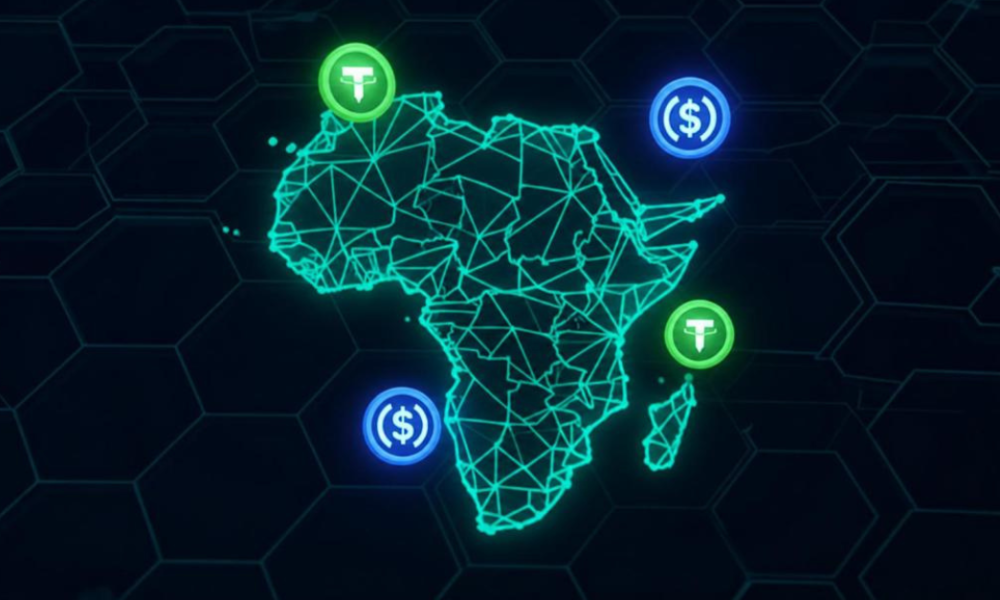
- The integration will support wallet-to-wallet USDC and USDT transactions and is intended to run alongside Flutterwave’s existing Polygon-based stablecoin infrastructure.
- The partnership targets the high costs and multi-day delays that continue to make cross-border payments into Africa among the most expensive in the world.
Flutterwave and Tempo, a payments-focused blockchain network, announced a strategic partnership on June 4.
Per the announcement, the goal of the partnership is to build and deploy stablecoin-powered settlement infrastructure across African payment corridors.
The announcement came at Money20/20 Europe in Amsterdam. Executives from both companies confirmed that Tempo’s Layer-1 blockchain will be integrated as an additional settlement rail within Flutterwave’s Send App and Flutterwave for Business (F4B) platforms.
The infrastructure is not yet in production, but the two companies are working to combine their networks and market capabilities to enable faster, lower-cost cross-border transactions once deployed.
Why Cross-Border Payments to Africa Remain Expensive
Sending money to Sub-Saharan Africa remains the most expensive remittance corridor in the world. According to World Bank data, the average cost of sending $200 to the region stood at 8.46% in 2025. This figure is nearly triple the UN Sustainable Development Goal target of 3%, and well above the global average. In some countries, like Tanzania, the costs exceed 50%.
On top of the cost, traditional correspondent banking chains can delay settlement by several business days. For individuals receiving remittances, that means slower access to funds. For businesses managing cross-border supplier payments, it ties up working capital.
Flutterwave already processes payments across more than 30 African countries and operates both consumer and enterprise products.
Its Send App connects diaspora senders in the US, UK, EU, and Canada to recipients across Africa. Its Flutterwave for Business platform handles enterprise cross-border flows, including supplier settlements and USD-denominated transactions.
How Flutterwave and Tempo’s Stablecoin Settlement Network Works
Tempo will serve as a complementary settlement rail within Flutterwave’s broader multi-chain infrastructure. Last year, Flutterwave announced the addition of Polygon-based stablecoin settlement capabilities.
Critically, corridor-specific routing means the two networks can be deployed selectively based on operational requirements. So, the tempo infrastructure does not replace existing polygon rails but adds to them.
Tempo’s Layer-1 is built for high-volume payment environments and aligns with ISO 20022 standards, the global messaging framework used by banks and financial institutions.
That alignment is particularly relevant to Flutterwave for Business, as it would eventually allow enterprise clients to integrate cross-border transactions into existing finance and ERP systems without significant technical retooling.
Flutterwave Founder and CEO Olugbenga “GB” Agboola said the partnership expands the company’s “multi-rail standard of global payment connectivity” and aims to make cross-border payments “faster, more predictable, and more cost-efficient for businesses and individuals across Africa.” Tempo Head of GTM Dan Romero noted that many of the corridors Flutterwave serves “have relied on slow, expensive fiat rails for years.”
Why This Partnership Matters For Stablecoin Use in Africa
Stablecoins have historically been associated with speculation and trading. What Flutterwave is doing, using USDC and USDT as settlement assets within a regulated payments product, reflects a shift that is now visible across the industry.
Sub-Saharan Africa moved over $200 billion in on-chain value between mid-2024 and mid-2025, with stablecoins accounting for more than 40% of that activity. Africa now leads global stablecoin ownership among crypto-active users at 79%.That adoption is driven by practical demand. Users utilise stablecoins to hedge against currency volatility and settle cross-border transactions faster and more cheaply than traditional banking allows.
There is a useful historical parallel here. Mobile money services like M-Pesa simplified domestic payments in East Africa when formal banking infrastructure was sparse. It solved the problem of reliably moving small amounts of money between people over distance. Users did not need to understand the underlying technology; they only needed to trust the interface.
Stablecoin rails are attempting something analogous for international payments. The technical layer is different, but the goal is the same. They make transactions that were previously slow and expensive, fast and cheap, without requiring end users to engage directly with the underlying system. Flutterwave’s approach with its Polygon and now Tempo integration is consistent with that logic.
Whether stablecoins can do for cross-border payments what mobile money did for domestic transfers depends on factors the Flutterwave-Tempo partnership alone cannot control. Regulatory alignment across corridors, liquidity depth in local markets, and the pace at which enterprise clients are willing to adapt their settlement workflows will all play a part in its performance and progress.
Africa’s regulatory landscape is currently in development. South Africa and Mauritius have moved furthest toward formal frameworks, while Nigeria, Kenya, and Ghana are still developing their approaches.
Flutterwave has navigated that complexity before.