


Inside Africa’s Capital Market: How Digital Assets Could Support African Enterprise Growth
Nicky Okoye argues that digital assets, tokenisation, AI and STEM education could help African businesses attract capital and compete globally.

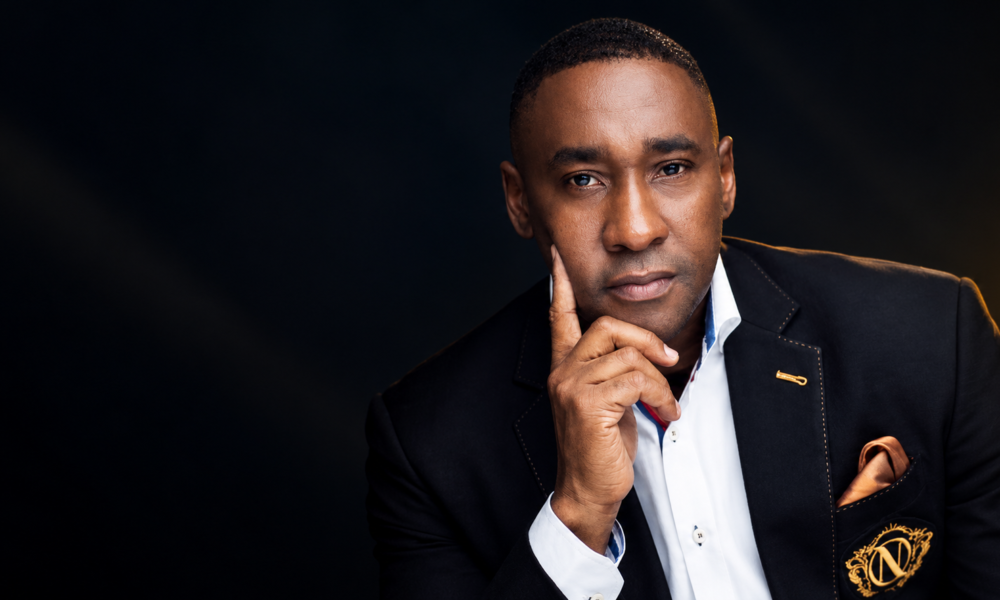
Table Of Content
TL;DR
- Global Investment Advisor Nicky Okoye argues that digital asset markets could give African businesses new ways to raise capital and fund infrastructure.
- He highlights tokenisation and utility tokens as potential tools, but tokenisation alone doesn’t guarantee liquidity, investor demand, or funding.
- Realising this potential requires clear legal ownership rights, physical asset custodianship, secondary trading venues, and regulatory compliance.
- He links long-term growth to AI, industrial technology and stronger investment in STEM education.
Why Digital Assets Are Part of the Debate
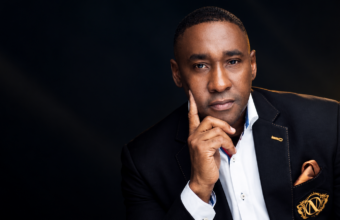
In a recent THISDAY commentary, global investment advisor Nicky Okoye argues that digital asset markets could transform access to capital across Africa.
Traditional capital markets across Africa struggle with structural limitations. These include local currency devaluations, liquidity constraints, and high trading costs. As a result, African capital markets have remained underdeveloped compared with global markets and even those in other emerging market economies.
The OECD’s 2025 Africa Capital Markets Report notes that African countries have raised $220 billion in equity capital over the last 25 years. This figure, the OECD notes, represents only 1% of the total value of equity raised globally and 3% of that by emerging market companies. It also equals only 0.5% of African GDP, far lower than in other regions.
The report also notes uneven capital market activity across Africa. More than 80% of activity and capital raised is concentrated in South Africa, Egypt, and Nigeria. To address this, countries are increasingly exploring alternative financing mechanisms, including digital assets.
Okoye points out that nation-building fundamentally relies on job creation, improved living standards, and sustained economic growth. In this context, leveraging global blockchain rails to move digital assets frictionlessly presents new avenues for entrepreneurs, micro, small, and medium-sized enterprises (MSMEs), and sub-national entities to raise capital.
Rather than viewing digital assets only as a tool for speculative trading, the argument positions them as underlying infrastructure for market innovation, municipal project funding, and cross-border investment flows.
Tokenisation as a Potential Financing Tool
At the core of Okoye’s vision is the application of real-world asset (RWA) tokenisation and utility token models to unlock illiquid value. By converting real estate, infrastructure claims, or enterprise equity into digital tokens, issuers can theoretically tap into broader pools of global and domestic liquidity.
Practical examples are already emerging across the continent. ADI Foundation and DCM recently partnered to enable tokenised deposits across Africa and the MENA region. The continent also recently saw participation in a high-profile corporate IPO broadened by digital assets, exemplified by Dangote’s Refinery IPO on Solana via NectarFi.
However, tokenisation is not a magical funding solution. Converting an asset into a digital format does not automatically guarantee liquidity, investor demand, or successful capital raising. The success of tokenised offerings remains contingent on sound underlying business models, investor protections, and transparent governance structures.
The Gap Between Tokenisation Potential and Practical Execution
While strategic visions have significant potential, bridging the gap between theoretical tokenisation and market execution requires addressing critical legal, operational, and regulatory questions. These include questions about:
- Ownership Rights: What legal or beneficial rights does a token holder actually own under local property and contract law?
- Asset Safeguarding: Who verifies, audits, and acts as custodian for the physical asset securing the digital token?
- Regulatory Compliance: Does the token arrangement comply with local securities regulation, such as Nigeria’s Securities and Exchange Commission (SEC) guidelines on Real-World Asset Tokenisation Platforms (RATOPs) and Virtual Asset Service Providers (VASPs)?
- Secondary Market Liquidity: Is there a compliant, active venue or exchange to facilitate secondary trading for token holders?
- Impact Verification: How does the project measure and prove tangible economic outcomes, such as job creation, infrastructure delivery, or enhanced public services?
Without resolving these operational realities, tokenised offerings risk remaining experimental rather than becoming mainstream drivers of enterprise growth.
The Wider Economic Opportunity and Technological Shifts
Okoye places his digital-asset argument within a broader, long-term macroeconomic framework. Citing Gallup forecasts, he highlights projections that global GDP could exceed $200 trillion by 2050, driven by compounding technological advances.
In Okoye’s assessment, capital deployment over the coming decades will be heavily concentrated in frontier technology ecosystems. This includes Artificial Intelligence (AI), data centre infrastructure, cybersecurity, and clean energy.
To capture a meaningful share of this global expansion, African economies must evolve capital market structures beyond traditional equity and debt instruments to accommodate integrated, tech-driven assets.
Why STEM Education and Regulatory Alignment Matter
Unlocking the benefits of digital asset markets requires human capital and regulatory clarity.
Okoye emphasises that technology adoption cannot happen in a vacuum. The level of technological growth required would also require sustained, coordinated investments in Science, Technology, Engineering, and Mathematics (STEM) education across Africa and developing regions.
Local technical expertise is essential to build, audit, and securely manage Web3 platforms and AI infrastructure.
From a policy perspective, African regulatory frameworks are actively adapting. For instance, Nigeria recently updated its virtual asset regulations. It also established a Virtual Asset Council to balance innovation with investor protection and financial stability.
Senator Osita Izunaso, who chairs the Senate Committee on Capital Market and Institutions, has urged the SEC to speed up tokenisation regulations.
Digital financing helps only if credible projects turn funding into productive activity. That needs clear rules, investor safeguards, reliable records, and skilled workers, which is where Okoye’s STEM argument meets the capital-markets debate.