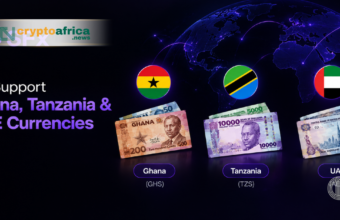



SFx Money App Adds GHS, TZS, and AED Accounts
The platform now supports seven currencies for personal accounts: USD, EUR, GBP, NGN, GHS, TZS, and AED.

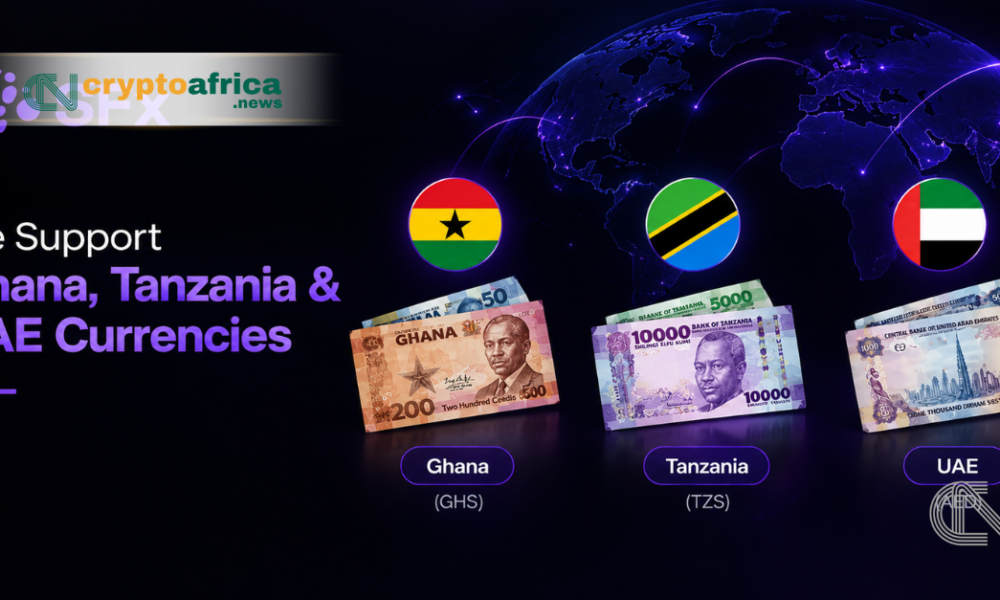
Table Of Content
TL;DR
- SFx Money App added personal accounts in Ghanaian cedi (GHS), Tanzanian shilling (TZS), and UAE dirham (AED).
- The platform now supports seven currencies for personal accounts: USD, EUR, GBP, NGN, GHS, TZS, and AED.
- A chat-style interface was also introduced for direct user-to-user (SFx-to-SFx) transfers.
- The launch follows SFx’s recent relaunch of its Nigerian naira (NGN) accounts and TRON-based USDT support.
SFx Expands its Multi-currency Lineup
SFx Money App has announced it now supports personal accounts in three new fiat currencies: the Ghanaian cedi (GHS), Tanzanian shilling (TZS), and United Arab Emirates dirham (AED).
According to SFx, the addition expands the app’s list of supported personal accounts to seven currencies. It joins existing accounts in United States dollars (USD), euros (EUR), British pounds (GBP), and Nigerian naira (NGN). The company says the move is meant to support users with financial ties across Africa and the UAE.
What The New Accounts Could Mean for Users
Multi-currency accounts can make it easier for people who receive money across borders, such as freelancers, remote workers, international trade participants, and families managing cross-border remittances.
By letting users hold and receive balances in local currencies like GHS, TZS, or AED directly in the app, SFx says users can avoid multiple currency conversions when receiving payments from clients or contacts in those regions.
However, practical utility and feature availability will depend on individual eligibility, identity verification requirements, local regulatory standards, and each country’s specific service terms.
Transfers Get a Messaging-style Interface
Alongside the new currency accounts, SFx introduced a chat-style interface designed for payments between app users. The feature lets users initiate transfers to other SFX account holders like sending a chat message. SFX describes it as “combining messaging and money transfers in one place.”
This interface upgrade applies strictly to internal SFx-to-SFx user transfers and does not integrate external social messaging networks or change external wire and bank clearing procedures.
What to check before signing up
Users should confirm the key terms directly with SFx. When evaluating any multi-currency payment app, consider:
- Coverage: Which countries and currencies are supported, and are the new accounts live where you are?
- Account details: Are they personal and suitable for receiving third-party payments?
- Costs: What are the fees for funding, currency conversion, and withdrawal, and what exchange rates apply?
- Safeguarding: Which institution holds customer funds, and what regulatory protections apply? A personal currency account should not be assumed to work like a conventional bank account.
- Disputes: What happens if a transfer is delayed or contested, and how can you reach support?
- Limits and eligibility: What transfer limits and verification requirements apply?
Multiple currency accounts can simplify cross-border money management, but they do not, by themselves, remove transfer fees, delays, or foreign-exchange costs.
The broader digital-finance strategy
The expansion follows recent infrastructure updates from SFx, including the relaunch of its Nigerian naira accounts and integration of TRON (TRC-20) USDT support to address growing demand for stablecoin payment apps across African markets.
In June, the company announced that it had processed $6.5M on-chain. The company also upgraded its system in May after a service disruption in April.
While SFx offers both fiat currency account features and cryptocurrency transfer options, the newly added GHS, TZS, and AED personal currency accounts function as fiat balances rather than blockchain-based assets or crypto wallets.